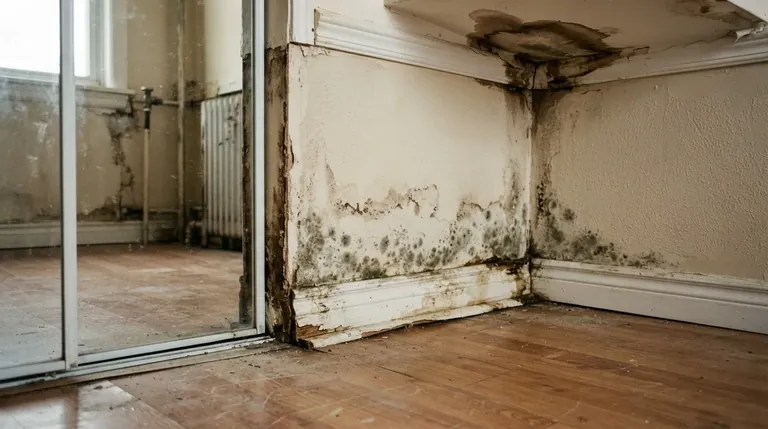
Mold After Water Damage in Missouri City, TX: The Rules
FEMA says wet items holding moisture can develop mold within 24 to 48 hours; Texas law sets separate licensing rules for hired mold work.
Request Water Damage HelpThe Clock Starts Before You Notice
Wet materials do not wait for you to finish drying out the rest of the house. FEMA, the EPA and the CDC each publish their own guidance on how quickly mold can take hold, so getting water out and materials drying matters as much as any single cleanup step that follows.
- FEMA: wet carpeting, furniture, bedding and any other items holding moisture can develop mold within 24 to 48 hours.
- EPA: in most cases, mold will not grow if wet or damp items are dried within 24 to 48 hours.
- CDC: advises drying out flooded areas fully and quickly within 24 to 48 hours.
These figures come from FEMA's flood fact sheet, the EPA's mold guidance and the CDC's mold guidance. If you have not yet secured the water source or checked whether the water is coming from your MUD's system, see who to call first in Missouri City before starting any drying.
Texas Rules Scale With the Size of the Mold Problem
Texas licenses mold work under Occupations Code Chapter 1958. A company you hire needs a TDLR mold remediation license once the project's mold covers 25 contiguous square feet or more. The law lets you work on your own home without a license; whether that is wise for a large or contaminated area is a separate question.
Swipe to see all columns →
| Situation | What Texas Law Says | Verified |
|---|---|---|
| Mold remediation under 25 contiguous square feet | No license needed for that remediation, under §1958.102(c) | Checked: September 2026 |
| Owner working on own residential property, fewer than 10 dwelling units | Owner or the owner's own employee does not need a license, with no area limit, under §1958.102(e) | Checked: September 2026 |
| Hiring an outside company for remediation of 25 sq ft or more | That company needs a TDLR mold remediation license | Checked: September 2026 |
| Same firm offering both inspection and cleanup on one project | Not allowed; assessor and remediator must be different license holders, under §1958.155(a) | Checked: September 2026 |
| After licensed remediation work is finished | Certificate of mold remediation due to the owner not later than the 10th day after completion, under §1958.154(a) | Checked: September 2026 |
Where the Owner Exemption Applies
Section 1958.102(e) lets you, or your own employee, do mold assessment or remediation on residential property you own, with no area limit, as long as it has fewer than 10 dwelling units. Licensing does not depend on how the water got there, whether from a MUD line, a roof leak or floodwater; contamination risk from sewage or floodwater is a separate safety question from the licensing question. If the mold traces back to a ceiling leak in Missouri City, the same threshold and certificate rules still apply.
Water in the house right now? Leave your number.
Separate License Holders for Assessment and Remediation
One license holder cannot both assess and remediate the same mold project under Texas law. Under Occupations Code §1958.155(a), a license holder may not perform both mold assessment and mold remediation on the same project. Ask any company you are considering which of the two roles it plans to perform.
- Before you hire anyone, find out whether the firm inspecting your mold also intends to handle the cleanup — state law does not permit one company to fill both roles on a single project.
- Get the assessment (testing and scope of work) from one license holder, then get the remediation (removal and cleanup) from a separate one.
Records to Save, and Why They Matter at Sale Time
Texas law obligates the contractor to hand the property owner a certificate of mold remediation once the licensed work wraps up. That certificate documents that licensed remediation work was done on the project it covers; it is due not later than the 10th day after the work is completed, under Occupations Code §1958.154(a).
§1958.154(b) puts the burden on the seller: copies of any mold remediation certificates issued in the five years before the sale must go to the buyer. Ask for these documents whenever you buy an older Missouri City house, whether in an established subdivision like Quail Valley or a newer one like Sienna.
File your certificate of mold remediation alongside your other home records. Selling inside five years of that work means §1958.154(b) requires you to pass copies to the buyer.
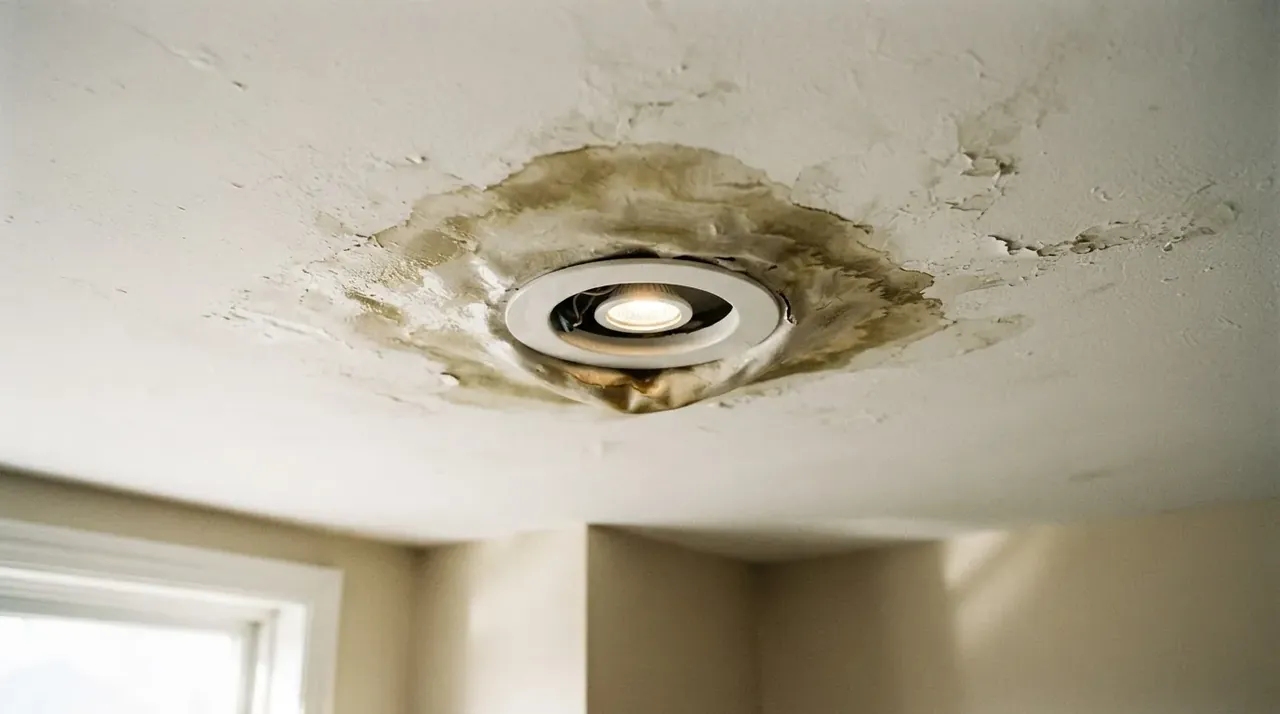
Mold from a ceiling leak or water coming from above often gets discovered late, inside a wall cavity or attic space, because nobody was watching that area closely. The same 25-square-foot threshold and certificate rules apply regardless of where in the house the mold started.

How a Covered Water Loss Changes Mold Coverage
Most standard homeowners policies in Texas exclude mold except for repair work tied to a water loss the policy already covers. This page is general information, not legal or insurance advice; your policy's own wording controls what is and is not paid.
- A sudden and accidental water release, like a burst supply line, is typically covered, subject to your policy's terms and deductible.
- Flood, continuous leakage and seepage are typically excluded, and so is mold that is not tied to a covered loss.
- Sublimits on covered mold repair vary by insurer — 25%, 50% or 100% of your dwelling coverage limit all appear in the endorsements the Texas Department of Insurance has published, so check your own declarations page.
If you rent your Missouri City home, tell your landlord about the leak or flood in writing right away — repairing the building is the landlord's responsibility. A renters policy pays out for your belongings, not for the building's structure. TDI's consumer guide on water damage and mold explains what a standard policy typically covers; for a dispute about your own claim, contact the Texas Department of Insurance consumer help line at 800-252-3439.
If That Did Not Work
Mold cleanup does not always go as planned. What you do next depends on how big the affected area turned out to be, and whether the dispute is about licensing or about an insurance claim. Here are three routes forward depending on what stalled.
- Try again: if the affected area is genuinely under 25 contiguous square feet, Texas law lets you handle that remediation yourself, but mold that returns is worth a fresh assessment, not the same cleanup repeated.
- Try another route: once the area hits 25 square feet, or you cannot tell how much is affected, treat it as a licensing question instead — ask any provider you are weighing to show a TDLR mold remediation license for whichever role, assessment or remediation, they are performing.
- Who to contact: TDLR is the enforcement body for a complaint against a mold licensee. For a dispute about what your homeowners policy covers, contact the Texas Department of Insurance consumer help line at 800-252-3439, 8 a.m. to 5 p.m. Central, Monday through Friday.

Frequently Asked Questions
Is a license required to remove a small mold patch in my Missouri City home? ▾
Is one company allowed to both test for mold in my house and then remove it? ▾
What documents should I collect once mold work wraps up? ▾
Does my homeowners insurance cover mold in Missouri City? ▾
After water damage, how quickly can mold set in? ▾
Does it matter whether the water came from a MUD line or a roof leak? ▾
Does a mold contractor have to notify TDLR before starting work? ▾
Request water damage help
Describe the damage. We pass your request to a restoration company serving your area, which contacts you to arrange an inspection.